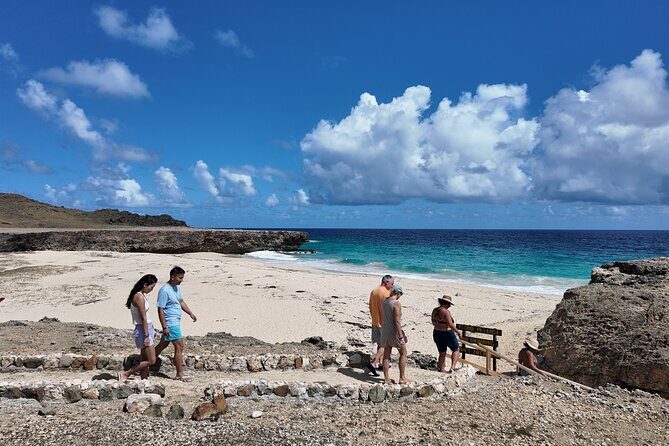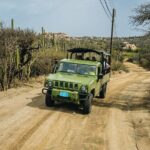
Four hours, one Jeep, Aruba off the paved routes. This Aruba Jeep tour is built for driving places normal cars won’t reach, with stops at the California Lighthouse and Cave Pool. I particularly love the hotel pickup and drop-off, which keeps your day simple, and the freedom to steer the route toward your interests. One drawback to plan for: some stops charge entrance fees, and the tour runs only in good weather.
You start at Ponton in Oranjestad around 8:00am and head back to the same spot at the end. The ride is the fun part, but you’ll want moderate fitness for uneven ground and short walks, plus you should expect short stops (mostly about 15 minutes, with 30 minutes at Cave Pool).
In This Review
- Key points to know before you go
- Why this Jeep tour feels different than a bus day
- Price and value: what $500 per group really means
- Logistics that keep the day smooth: pickup, timing, and group size
- California Lighthouse near Hudishibana and Arashi Beach
- Alto Vista Chapel: the little yellow church built for worship
- Natural Bridge and the rugged northern shore stops
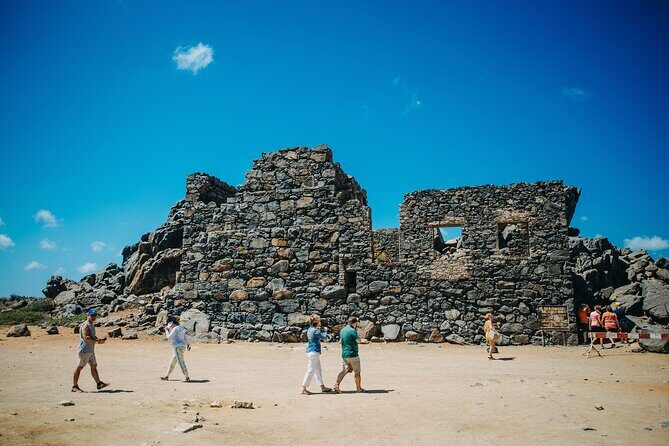
- Bushiribana Ruins: gold mining remnants in Aruba’s rugged north
- Ayo Rock Formations: old-looking boulders with walkways
- Cave Pool Aruba: the tidal swimming hole near the ruins
- Take the wheel? Or ride along like a pro
- Who this Jeep tour is best for (and who should think twice)
- Should you book this Aruba 4×4 adventure?
- FAQ
- How long is the Jeep tour in Aruba?
- What time does the tour start?
- Where does the tour begin and end?
- Is hotel pickup and drop-off included?
- What’s included in the tour price?
- Are entrance fees included for the stops?
- Is snorkeling equipment included?
- How many people can be in the tour group?
- Is a deposit required?
- What happens if the weather is bad?
Key points to know before you go
- 4×4 access to Aruba’s tougher northern and eastern areas that regular vehicles can’t handle
- Hotel pickup and drop-off so you’re not hunting for a meeting point
- Max 20 people, which usually keeps the experience calmer than big bus tours
- Frequent quick stops (15 minutes each, longer at Cave Pool) for a “highlights of the north” day
- Entrance fees not fully included, including a $10/person option at California Lighthouse
- No snorkeling gear—even though there’s a tidal swimming stop, you’ll need to bring your own if you want it
Why this Jeep tour feels different than a bus day
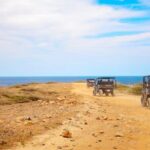
If you want Aruba at full speed, this is the right kind of tour. The big difference here is simple: you’re on a 4×4 Jeep that’s meant for rougher roads and off-road paths. That means you can reach coast viewpoints and rock formations that stay off the typical cruise-excursion circuits.
I like the pacing. The day is packed, but it’s not frantic—short stop times let you see a lot, then you’re back behind the wheel (or in the passenger seat) heading to the next place. And because it’s a smaller group (up to 20), it feels less like cattle and more like a shared adventure.
There’s also a practical freedom built in. The tour is described as tailorable to your interests and schedule. That matters in Aruba, where the best choice for many people is often weather, shade, and photo timing. If you’re the type who likes options, this setup is worth paying attention to.
Other jeep safari tours we've reviewed in Aruba
Price and value: what $500 per group really means
The price is $500 per group up to 4 people. That can be a great deal—or not—depending on how you’re traveling.
Here’s the quick math:
- If you book the Jeep with 4 people, you’re effectively at about $125 per person for a 4-hour, guided 4×4 tour with pickup.
- If you book with 2 people, it’s closer to $250 per person.
To me, the value comes from three places: the vehicle type (real off-road access), the guide, and the convenience of pickup/drop-off. If you’re trying to build a day around the north and natural sites, paying for transportation that can actually reach them is usually where the money turns into time saved.
One more detail: booking trends show it’s commonly scheduled about 63 days in advance. If you’re traveling during peak periods, I’d follow that pattern and lock it in early so you’re not choosing between weird start times and limited availability.
Logistics that keep the day smooth: pickup, timing, and group size

This tour is set up to minimize hassle. You get pickup and drop-off, and the tour starts and ends at Ponton in Oranjestad. You also get a mobile ticket, which is handy when you’re juggling sun, photos, and a busy schedule.
The time structure is straightforward:
- Total duration: about 4 hours
- Start time: 8:00am
- Stop pattern: mostly 15 minutes each, plus 30 minutes at Cave Pool
I also appreciate the group cap: maximum 20 travelers. That doesn’t sound dramatic, but it often changes the whole vibe when people are trying to take photos, move between viewpoints, and listen to the guide.
A heads-up for comfort and safety: the tour notes moderate physical fitness. That’s a fair warning for uneven ground and short walks at natural sites. If you’re good on your feet for brief stretches, you’ll likely be fine.
And yes, service animals are allowed.
California Lighthouse near Hudishibana and Arashi Beach
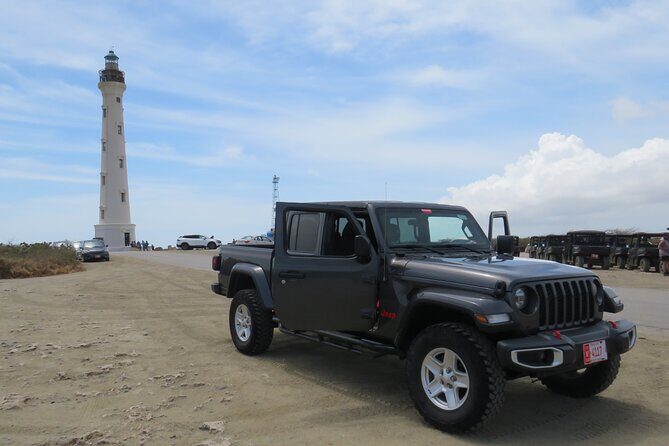
Your first stop is the California Lighthouse, located at Hudishibana near Arashi Beach on Aruba’s northwest tip. The lighthouse was named for the steamship California, wrecked nearby on September 23, 1891. That bit of detail matters because it gives you context for what you’re looking at—not just a pretty structure.
You’ll have about 15 minutes here. Admission isn’t included if you want to go inside, and the fee listed is $10 per person. Even if you skip the entrance, you’ll still get value from the outside views and the story behind the wreck.
Timing tip: since this is early in the tour, it can be easier to get clean photos before the crowds and before the sun gets harsh. If you’re the kind who wants both pictures and reading small plaques, plan to decide on the entrance fee quickly so you don’t lose time.
Possible drawback: because this stop has an extra optional cost, it’s smart to budget it now instead of deciding last minute.
Alto Vista Chapel: the little yellow church built for worship
Next up is Alto Vista Chapel, described as a small yellow chapel built by Spanish missionaries in 1750. Services are still conducted there, and it’s considered the first church established in the Caribbean.
You get about 15 minutes, and the good news is that admission is free. This stop is less about adventure and more about contrast—after the off-road driving, you get a calm, human-scale place that feels like a pause in the day.
One thing I like about including a chapel stop on a Jeep tour is balance. Aruba’s famous for sun and coast time, but it also has deep roots. A quick stop like this gives you a sense of the island beyond rocks and roads.
Consideration: the stop is short. If you want a longer look, treat this as a quick visit for atmosphere and photos, not a full-on church tour.




Natural Bridge and the rugged northern shore stops
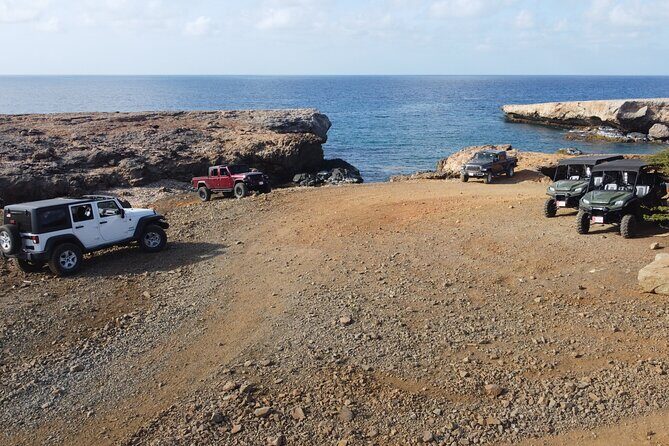
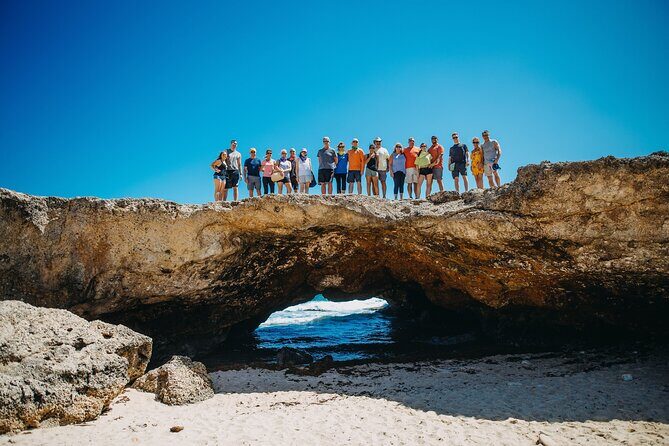
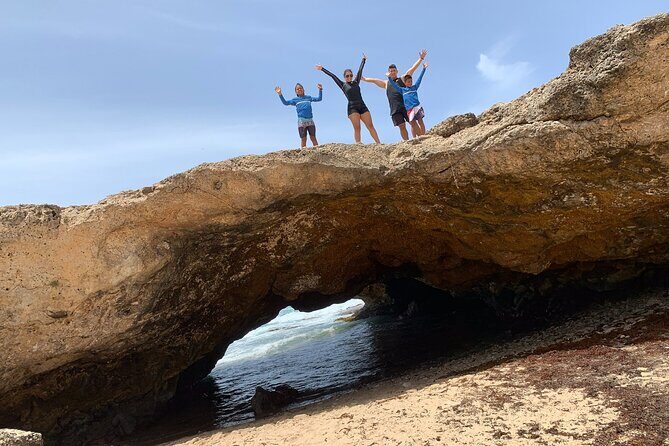
Then you head to the Natural Bridge area on Aruba’s northern shore. This is one of those places where the scenery doesn’t need a lot of explanation: waves and wind shaped the rock over a very long time, and the result is a natural formation that’s easy to look at and hard to stop staring at.
You’ll have 15 minutes here. Admission isn’t included, so if there’s an entry fee on-site, it’s on you. In the real world, natural sites like this can be hit-or-miss depending on wind and visibility, so if conditions aren’t perfect, you still get the benefit of pulling over in the right spot for photos.
Why this stop is worth it: it’s a reminder that Aruba’s coast is active. It’s not just postcard water. The natural features are still getting carved.
Possible drawback: because admission isn’t included, you may want to bring a little extra cash or ensure you’re ready for small fees along the way.
Bushiribana Ruins: gold mining remnants in Aruba’s rugged north
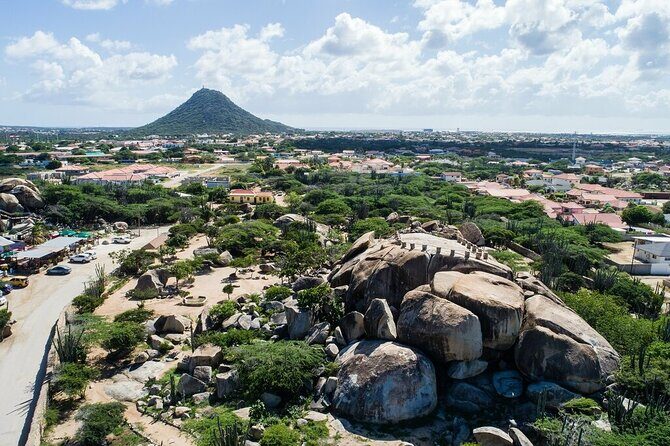
After Natural Bridge, the tour moves to Bushiribana Ruins, which connect to Aruba’s gold history. You’ll see remnants and sites associated with gold mines and gold mills.
You get about 15 minutes, and admission is free here. This stop feels different from the chapel and different from the coastal rock formations. Instead of looking at geology shaped by nature, you’re looking at shapes left by people—evidence of an industry that helped form the island’s story.
If you like history without getting stuck in a museum schedule, ruins like this are a great compromise. You’re outdoors, the walking is minimal, and the guide can point out what you should notice.
Practical note: because your time is brief, focus on the features the guide mentions and don’t try to read everything. Aruba sun moves fast, and you’ll want the energy for later stops.
Ayo Rock Formations: old-looking boulders with walkways
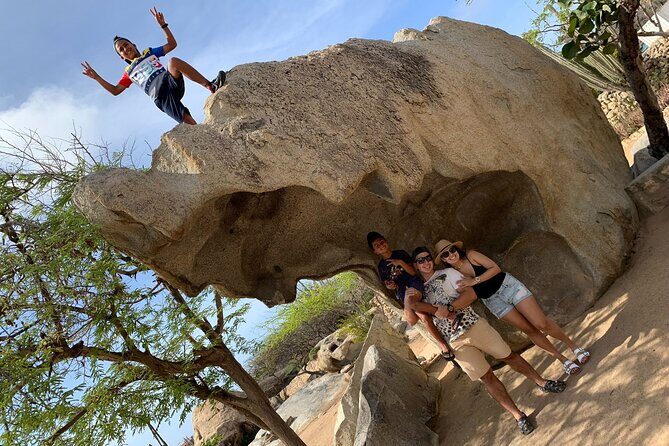
Next comes Ayo Rock Formations, sometimes described as ancient rock giants with pathways to help you explore. This one’s a strong “stand there and look around” stop. You can see how the unusual hills and massive boulders create a scene that feels nothing like a flat island.
You get 15 minutes, and admission is free. That’s a nice perk, because it removes one more cost decision during the day.
What I like about this stop is the built-in structure. The tour notes pathways are in place, which makes it more manageable than trying to scramble over rocks without guidance. It’s also a good moment to slow down after the driving and take in a wider view.
A consideration: boulder areas can mean uneven ground underfoot. If you know your limits, wear supportive shoes and take your time at the walkways. You don’t need to rush for good photos.
Cave Pool Aruba: the tidal swimming hole near the ruins
The final major stop is Cave Pool Aruba, also known by names like the Small Cave Pool, New Natural Pool, and Hidden Pool Cave. It’s a tidal swimming hole tucked into the rocky coastline near the Bushiribana Ruins.
You get 30 minutes here, and admission isn’t included. The time matters because tidal pools often look best when conditions are right. With only half an hour, you’ll want to be ready to hop in (if you plan to) or at least claim a good viewing spot.
Important gear note: snorkeling equipment and swimming equipment are not included. Even if you’re just planning to dip a foot in, I’d think of this stop as one you’re doing with your own plan. If you want water shoes or a towel, bring them.
This is also where the phrase good weather becomes real. The tour is explicitly weather-dependent. If conditions aren’t right, you might be offered a different date or a full refund, but you don’t want to arrive with no backup plan.
Take the wheel? Or ride along like a pro
The tour description emphasizes an off-road experience designed with adventurers in mind, and it notes you can take the wheel of your own off-road vehicle. How it’s handled in practice can vary by operator and your group setup, but the overall idea is clear: it’s not a passive sit-and-stare tour.
Either way, here’s what matters for you:
- If you drive, you’ll want to pay attention to instructions and follow route guidance.
- If you’re a passenger, you still get the same benefit: better access and better viewpoints than you’d get in a standard car.
The small-group size also helps here. When everyone’s not crammed in, it’s easier for the guide to manage stops and transitions without delays.
And speaking of delays: like any off-road day, hiccups can happen. One issue that’s been reported is getting stuck due to a dead key fob battery. If you’re renting or taking a vehicle role, do a quick check at the start and let the team know immediately if anything seems off.
Who this Jeep tour is best for (and who should think twice)
This tour fits you if:
- You want Aruba off the main roads with 4×4 access
- You like natural sites and short, efficient stops
- You’re traveling as a pair or family group where splitting the $500 cost helps
- You want pickup and don’t want to manage a self-drive day
It may not be ideal if:
- You’re strongly budget-focused on entrance fees
- You hate any walking on uneven ground (it’s described as moderate fitness)
- You need snorkeling gear provided (it isn’t)
Also, the tour max is 20 people, which is good for comfort, but it still means you won’t get a private Jeep-by-Jeep experience. If you want truly private pacing and long stays at every stop, you might want to consider a different style of tour.
Should you book this Aruba 4×4 adventure?
I’d book it if you want the north and the rock-and-coast Aruba that most people don’t see from a normal vehicle. The mix of California Lighthouse, mission-era Aruba at Alto Vista Chapel, gold-era Bushiribana Ruins, and the tidal Cave Pool is a sensible run of different island stories in one morning-to-midday block.
Book it with clear expectations:
- Bring a budget for entrance fees at places that charge (including the $10/person option at California Lighthouse)
- Expect a schedule of short stops, not long beach time
- Bring your own water-and-swim mindset since swimming gear isn’t included
- Plan around good weather, since the tour is weather-dependent
If that sounds like your kind of day, you’re likely to feel like you got more Aruba per hour than you would from a standard excursion.
FAQ
How long is the Jeep tour in Aruba?
The tour lasts about 4 hours.
What time does the tour start?
The start time is 8:00am.
Where does the tour begin and end?
It begins and ends back at Ponton in Oranjestad, Aruba.
Is hotel pickup and drop-off included?
Yes. Pickup and drop-off are included.
What’s included in the tour price?
The tour includes a 4-hour Jeep tour and a local guide, plus pickup/drop-off.
Are entrance fees included for the stops?
Not all of them are. Entrance is not included at California Lighthouse (optional $10 per person), Natural Bridge, and Cave Pool. Alto Vista Chapel and Bushiribana Ruins are listed as free, and Ayo Rock Formations are listed as free.
Is snorkeling equipment included?
No. Snorkeling equipment is not included, and no snorkeling or swimming equipment is included.
How many people can be in the tour group?
The tour has a maximum of 20 travelers.
Is a deposit required?
Yes. A deposit is required and it requires a credit card.
What happens if the weather is bad?
The tour requires good weather. If it’s canceled due to poor weather, you’ll be offered a different date or a full refund.