REVIEW · ARUBA
Aruba Island Sightseeing Tour
Book on Viator →Operated by El Tours & Transfers · Bookable on Viator
Aruba’s highlights are spread out, so this tour is a smart way to get your bearings fast. In one 3.5-hour loop, you’ll ride comfortably in an air-conditioned coach and hit the island’s most recognizable photo stops, with guide commentary that explains what you’re seeing and why it matters.
I especially like the easy round-trip pickup from hotels or the cruise port, which removes the hassle of renting a car. I also like that the schedule focuses on a few high-impact places—aloe, rocks, ruins, a chapel, and a lighthouse—so you leave with real context, not just driving by scenery. One thing to keep in mind: the stops are short, so you’ll need to move efficiently if you want extra time for photos or browsing.
In This Review
- Key Points at a Glance
- A Quick Aruba Island Loop That Works When Time Is Tight
- Price and Value: What $49 Buys You in Real Practical Terms
- Pickup Timing, Meeting Point Clarity, and Cruise-Ship Reality
- Stop 1: Aruba Aloe Factory, Museum, and Store (More Than a Souvenir Stop)
- Stop 2: Casibari Rock Formation (Ayo Area) for Those Big-Scenery Photos
- Stop 3: Bushiribana Ruins and the Gold-Fever Story
- Stop 4: Alto Vista Chapel (Yellow Walls With Deep Roots)
- Stop 5: California Lighthouse Near Arashi Beach (A Wreck Story, Not Just a Photo Point)
- Comfort, Pace, and the Realities of a Coach Tour
- Guides and Language: When the Stories Actually Help
- Who This Tour Fits Best (and Who Might Want Something Else)
- Final Call: Should You Book This Aruba Highlights Coach Tour?
- FAQ
- How long is the Aruba Island Sightseeing Tour?
- What’s included with the ticket?
- Are there admissions fees for the stops?
- Do you provide mobile tickets?
- Is food or alcohol included?
- When can cruise passengers book the tour?
- What is the maximum group size?
- Is free cancellation available?
- Are children and service animals allowed?
Key Points at a Glance
- Air-conditioned coach tour that keeps you comfortable while you crisscross Aruba
- Pickup included from Aruba hotels and from cruise ports
- Focused island loop with stops for aloe, rock formations, ruins, a chapel, and the California Lighthouse
- Admission-free stops noted for the listed sights
- Small-group feel with a maximum of 40 travelers
- Bottled water included, with the option to buy alcoholic drinks at certain stops
A Quick Aruba Island Loop That Works When Time Is Tight
If you’re visiting Aruba for the first time and you want the big landmarks without planning a route, this tour fits the bill. It’s built around a simple idea: get you to the sights that most people come here for, explain them clearly, and then drop you back at your hotel or the port with enough of the day left to do your own thing.
The overall pace is “see it, learn it, move on.” That’s a plus when you’re trying to cover ground in a limited window. It’s also why you should think of this as a starter tour. You’ll get names, stories, and locations you can build on later—at your resort, at the beach, or on a return visit.
Other island sightseeing tours in Aruba


Price and Value: What $49 Buys You in Real Practical Terms
At $49 per person for a tour that runs about 3 hours 30 minutes, you’re paying for three big conveniences: transportation, guided interpretation, and pre-packaged stops. Many of the listed stops are marked as admission ticket free, so you’re not stacking extra costs on top of the ticket price.
When you compare this to renting a car, remember the hidden costs: gas, insurance, parking, and the stress of driving unfamiliar roads in the heat. For a first-time visit, this kind of guided circuit is often the better trade—especially if you’re traveling as a couple, solo, or with people who don’t want to deal with logistics.
Also, bottled water is included. Aruba can be bright and hot, and that small detail matters more than people think.
Pickup Timing, Meeting Point Clarity, and Cruise-Ship Reality
This tour includes hotel pickup and drop-off, plus port pickup and drop-off if you’re on a cruise. That’s a huge convenience, but you still need to be alert about timing.
Here’s the key scheduling note: the afternoon departure is only for cruise guests whose ship docks after 8:00 am. Hotel guests must book the morning departure. If you’re sailing, double-check your docking and disembarkation/re-boarding times when you book—this tour asks for those details.
One practical tip: confirm the exact meeting spot for your pickup. Some travelers have run into confusion about whether to wait inside a terminal or outside near a gate. Before you go, have your pickup address and location pinned down in your phone, so you’re not depending on vague instructions while you’re standing in the sun.
Stop 1: Aruba Aloe Factory, Museum, and Store (More Than a Souvenir Stop)

The first stop is the Aruba Aloe Factory, Museum, and Store, where you’ll get a look at how aloe is grown and produced on the island—plus a long timeline of cultivation history. The museum and factory tour is designed to answer a simple question: why aloe is such a big deal here.
You’re allotted about 45 minutes, which is enough time to walk through the exhibits, watch or hear the explanation, and then browse the store without feeling rushed. The store is where you’ll see aloe-based products in a wide range of forms—creams, lotions, and drinks.
A tip if you like trying local flavors: if you’re offered juices at the stop, you might spot watermelon juice among the options. If you like sampling, this is a good moment to do it, because you’ll already be in the “get-it-in-your-bag” mindset.
Why this stop is worth it: Aruba is known for more than beaches, and aloe is one of the island’s most iconic industries. Even if you don’t buy anything, the tour helps you understand how the island makes and markets a product that’s tied to its landscape.
Stop 2: Casibari Rock Formation (Ayo Area) for Those Big-Scenery Photos

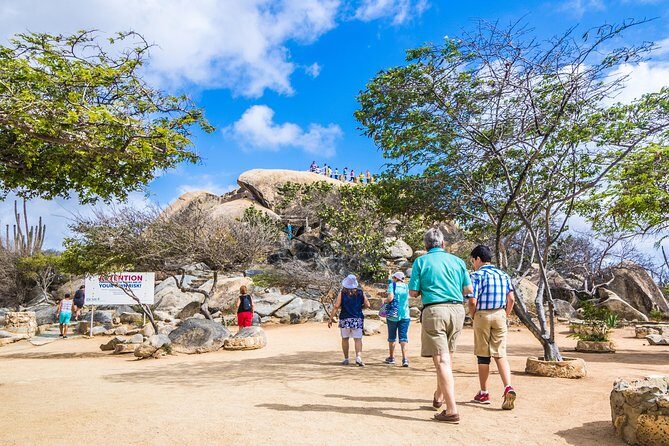
Next up is the rock formation stop, commonly referred to as the Casibari Rock Formation area and connected with the Ayo rock formations. Aruba’s geology gives you dramatic, eroded shapes that look almost sculpted. This is one of those places where you’ll understand why people describe the view as rugged and otherworldly—without needing a hike.
You get about 30 minutes here. That’s short enough that you should plan your photo strategy in advance: take your wide shots first, then circle in for closer angles. If you bring a camera, keep your settings ready so you’re not fumbling when the light hits.
What I like about this stop: it’s visual storytelling. Your guide can point out features and help you connect the rocks to Aruba’s broader landscape. You’re also not stuck in one spot like at a museum—you’re seeing open-air scenery that makes the island feel real.





Stop 3: Bushiribana Ruins and the Gold-Fever Story

Then you head to the Bushiribana Ruins, a site tied to Aruba’s early-19th-century gold fever. This stop is less about what you can touch and more about what you can interpret from what’s left behind.
You get about 30 minutes, which is enough to walk the grounds, take photos, and follow along with the guide’s explanation. The context matters here. If your goal is understanding Aruba beyond beach names, the gold-fever story gives you a human-scale reason for why this place ended up the way it did.
One drawback to expect: ruins are always uneven territory. Aruba sun is strong, so wear shoes you’re comfortable walking in, even if the path isn’t long. Also, keep an eye on shade. Thirty minutes can feel longer when you’re standing in open sun without a break.
Stop 4: Alto Vista Chapel (Yellow Walls With Deep Roots)

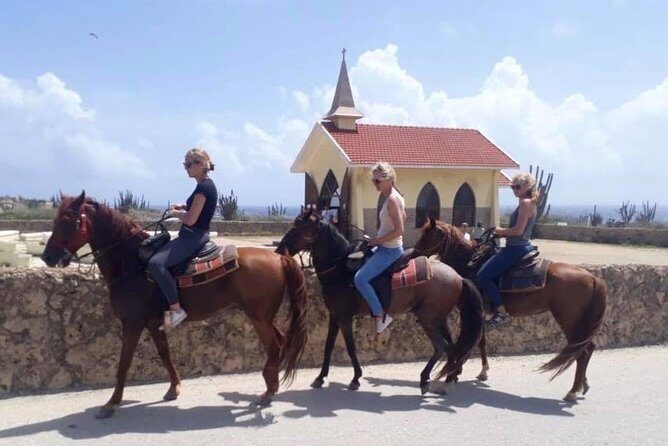
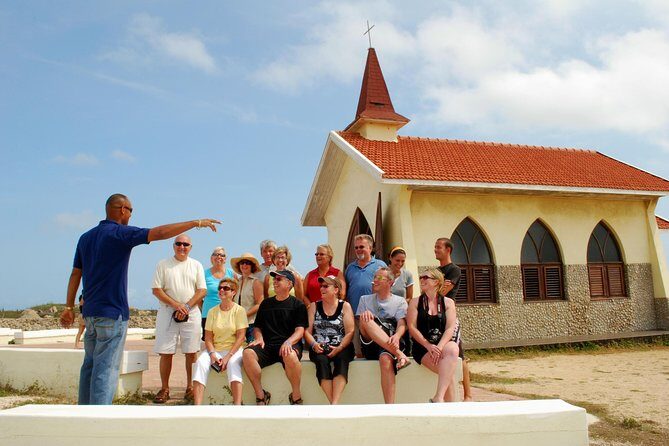
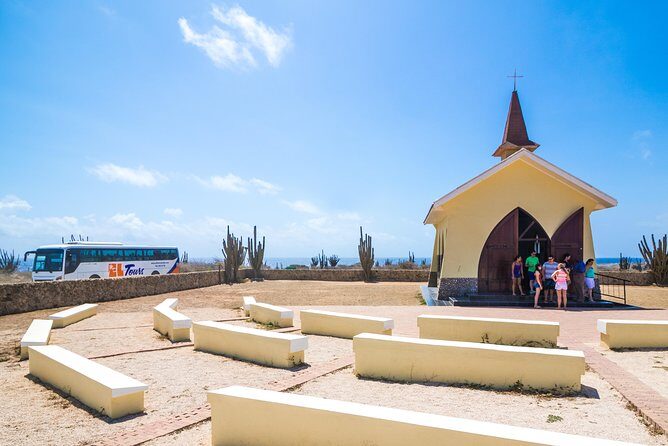
Alto Vista Chapel is one of those Aruba landmarks you can spot and recognize immediately—especially because it’s the bright yellow you’ve seen in countless photos. But the real interest is what the chapel represents.
The chapel was built in 1952 on the site of an earlier Catholic church dating back to 1750, built by Spanish missionary Domingo Antonio Silvestre. That’s a lot of time layered into one viewpoint.
You’ll have about 20 minutes. That’s brief, but it’s usually enough for a quick look, a few photos from the roadside, and time to absorb the story. If you’re the type who likes slow looking, you’ll probably want you to arrive with your goals set: one or two angles, then move back.
Practical note: chapels and viewpoints can mean stairs or uneven ground depending on where you stop to photograph. Dress for sun and be ready for a short walk.
Stop 5: California Lighthouse Near Arashi Beach (A Wreck Story, Not Just a Photo Point)
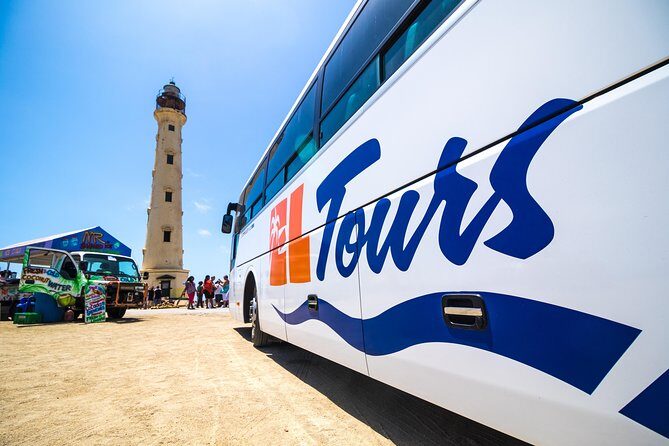
The last major sight is the California Lighthouse, located at Hudishibana near Arashi Beach on Aruba’s northwest tip. This lighthouse is named for the steamship California, which wrecked nearby on September 23, 1891.
You get about 20 minutes. In that time, you can do two things well: (1) get the classic lighthouse view and (2) hear the wreck story your guide ties to the location. It’s the kind of ending that makes the island feel connected—because it reminds you Aruba wasn’t only a stop for beach lovers. It was also on historic routes where storms and navigation mattered.
If you have time later in the day, Arashi Beach is a good area to return to. This tour doesn’t turn it into a full beach day, but it points you to where the coastline looks great from land.
Comfort, Pace, and the Realities of a Coach Tour
This tour is coach-based, so you’ll spend a meaningful part of the day seated. The big win is that it’s air-conditioned, and you’re being shuttled between stops instead of handling driving.
But the trade-off is the short stop times. You’re looking at:
- about 45 minutes at the aloe site
- about 30 minutes at the rock formation
- about 30 minutes at the ruins
- about 20 minutes at the chapel
- about 20 minutes at the lighthouse
That’s exactly why it works well as a first overview. It’s also why you should avoid treating it as a deep research mission.
A couple more comfort points to plan for:
- The roads can feel a bit rough in places, so if you’re sensitive to bumps, bring a light layer and stay braced for jolts.
- One practical note from past experience: there may not be a toilet on the bus. If restroom access matters to you, plan stops strategically and use facilities where you can during the sightseeing blocks.
Finally, the tour is built for up to 40 travelers. That usually means you’ll be in a group, but not in a massive cattle-car situation. Still, it’s a good idea to sit where you can hear your guide clearly.
Guides and Language: When the Stories Actually Help
One of the most consistent positives is the guide experience. Guides such as Peter and Ricardo are described as friendly, entertaining, and good at explaining what you’re seeing—often in both English and Spanish.
That bilingual handling matters because it can keep everyone engaged, not stuck guessing. It also makes the explanations more useful: instead of just hearing facts, you get guided storytelling that helps the landscape and landmarks make sense.
Just be realistic: a coach tour has limited time. If a guide’s style leans more talkative, you’ll still want to watch the schedule and keep your eye on the next departure time so you don’t feel rushed when you’re already outside in the sun.
Who This Tour Fits Best (and Who Might Want Something Else)
This Aruba sightseeing tour is a great match if:
- you’re on your first visit and want an organized overview
- you don’t want to rent a car
- you like learning context while you move between photo-worthy stops
- you want to be back at your hotel early enough for beach time or dinner plans
It may feel less ideal if:
- you want long stays and slow exploration at each site
- you need lots of restroom breaks on the move
- you’re the type who hates being on a tight schedule
Final Call: Should You Book This Aruba Highlights Coach Tour?
I’d book this tour if you want a smart, cost-friendly way to see Aruba’s best-known landmarks and understand them fast. For the price, you’re getting pickup, air-conditioned transport, guided commentary, bottled water, and stops that are marked as admission-free. That combination is hard to beat if you’re trying to make the most of a short stay.
Skip it (or pair it with something else) if you’re a “stay longer, learn slower” traveler. In that case, you’ll likely want to follow up with separate time at the places that hook you most—especially the coastline around Arashi Beach and the aloe stop if you’re into product and industry.
If you want one easy way to get your bearings and feel confident planning the rest of your day, this is a strong starter choice.
FAQ
How long is the Aruba Island Sightseeing Tour?
The tour duration is about 3 hours 30 minutes.
What’s included with the ticket?
Round-trip hotel pickup and drop-off or port pickup and drop-off, a professional driver and guide, an air-conditioned vehicle, bottled water, and all taxes/fees/handling charges.
Are there admissions fees for the stops?
The listed stops are marked with admission ticket free.
Do you provide mobile tickets?
Yes, the tour uses mobile tickets.
Is food or alcohol included?
Bottle of water is included. Food and non-alcoholic drinks are not included unless specified. Alcoholic drinks may be available to purchase at certain stops, but they are not included.
When can cruise passengers book the tour?
The afternoon departure is only for cruise ship guests whose ships dock after 8:00 am. Hotel guests must book the morning departure.
What is the maximum group size?
This tour has a maximum of 40 travelers.
Is free cancellation available?
Yes. You can cancel for a full refund up to 24 hours before the experience’s start time. If it’s canceled due to poor weather, you’ll be offered a different date or a full refund.
Are children and service animals allowed?
Children must be accompanied by an adult. Service animals are allowed. Most travelers can participate.