REVIEW · ARUBA
Exclusive Aruba UTV Tours
Book on Viator →Operated by Touriffic Adventures Aruba · Bookable on Viator
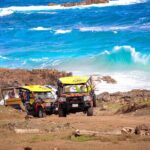
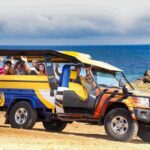
Four hours, and Aruba feels twice as big. This UTV tour is built for small-group adventure with family-run energy, plus a guide who brings the island’s stories to life. On our route, Toto (and other guides like Q and Juan) keep things fun and moving, while you crisscross the rugged side of Aruba on real dirt-and-coast scenery.
I love how practical and structured the experience feels, from the first pickup/transfer to the moment you’re back at the start point. You also get solid included extras that matter outdoors: dust goggles and bandanas, plus bottled water to keep you comfortable in the sun and grit.
One thing to consider: this is off-road. Expect bumpy rides and dust (mud can happen if it rains), so plan for closed-toe shoes and a mindset for “adventure” rather than “smooth sightseeing.”
In This Review
- Key things that make this UTV tour worth it
- Small-group UTV adventure: what you’re really buying
- Price and value: $256 per group actually makes sense
- Pickup, start point, and how the day flows
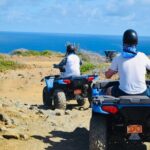
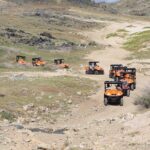
- The UTV experience: bumpy terrain, real driving, real confidence
- Stop by stop: black sand, natural bridges, surf beaches, and the Mother Bridge viewpoint
- Stop 1: Touriffic Adventures transfer and launch
- Stop 2: Blackstone Beach and the triple natural bridge area
- Andicuri Beach: surf coast + a slow-down for photos
- Shark Bay: for experienced surf conditions
- The Mother Bridge viewpoint: what collapsed and what replaced it in your imagination
- Bushiribana Ruins, Catholic-era history, and natural bridge views
- Bushiribana Ruins: the island’s story in stone
- Wariruri Beach + the baby natural bridge
- Catholic religion introduced: the 1750 to 1950s timeline
- California Lighthouse and the calm-side vs rough-side contrast
- Arashi Beach: the finish with a real chance to cool off
- Guide impact: Toto, Q, and Juan make the day feel VIP
- Practical tips before you go (so your day stays fun)
- Who should book this UTV tour in Aruba
- Should you book Exclusive Aruba UTV Tours?
- FAQ
- What’s the duration of this Aruba UTV tour?
- Where does the tour start and end?
- Do you offer pickup?
- What are the age requirements for driving and riding?
- What’s included and what should I bring?
- Can I get a full refund if I cancel?
Key things that make this UTV tour worth it
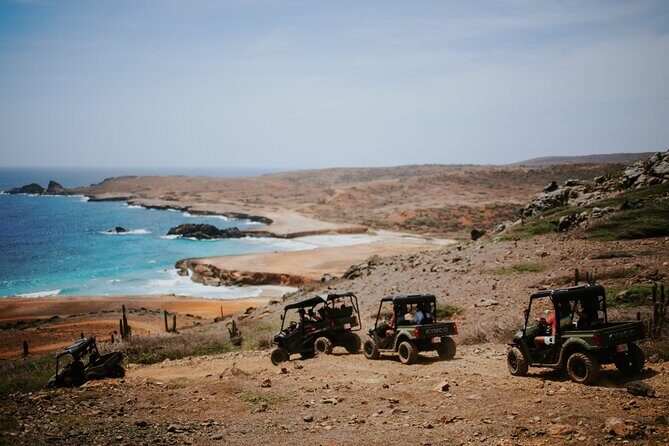
- Small groups beat the crowd: fewer UTVs means less waiting and more time actually riding and stopping for photos.
- Included gear helps you stay comfortable: bottled water, dust goggles, and bandanas take the sting out of Aruba’s dry conditions.
- Stops are a mix of coast, cliffs, and history: black sand, natural bridge viewpoints, ruins, and lighthouse views in one loop.
- Guides focus on safety and driving confidence: you get instruction so even first-timers can handle the UTV.
- Optional adventure moments: there’s time where you can choose to try a natural pool/cliff-style jump with guide support.
- Arashi Beach makes the finish feel like a reward: a final swim break and a place to grab a cold drink or snack.
Small-group UTV adventure: what you’re really buying
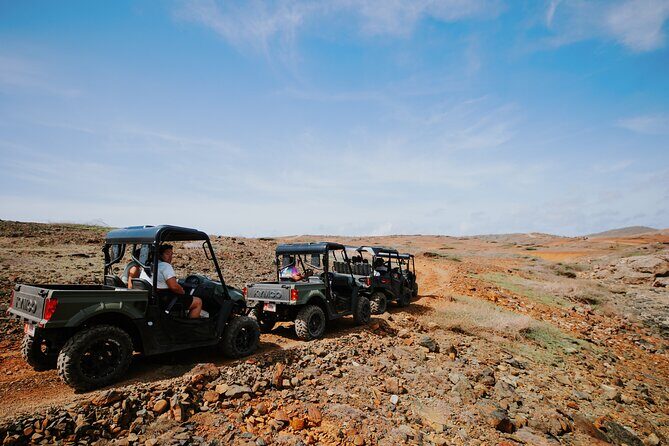
This tour isn’t trying to stuff in every stop on the island. It’s designed around a small group size, and that changes the whole day.
With fewer people, the ride doesn’t feel like a conveyor belt. You’re not stuck watching long lines of UTVs in front of you. And when your guide stops for a viewpoint or a photo moment, it feels more like time you own—not time you’re borrowing.
That “family-owned, quality over quantity” idea also shows up in the guide style. In the best moments, the guide is equal parts instructor, storyteller, and hype person—especially when the terrain gets rough or you’re near water features with strong surf.
The result: you spend your effort on driving, seeing, and laughing at the dust cloud you’re creating—not on logistics.
Other UTV & ATV tours we've reviewed in Aruba

Price and value: $256 per group actually makes sense
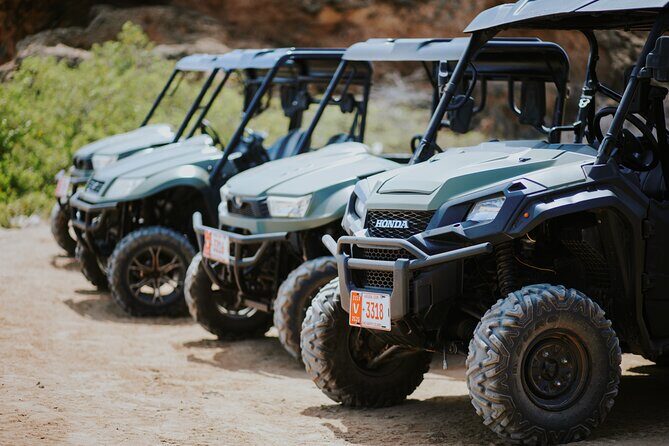
The price is $256 per group (up to 2) for about 4 hours. That pricing model can be great value if you book as a pair, because you’re not paying per person on a big bus-style tour.
What you’re getting for that group price matters:
- a guided UTV experience with private transportation
- bottled water
- dust goggles and bandanas
- admission tickets included for multiple stops
- pickup is offered
- and the group size stays small (maximum 14 travelers)
If you’ve done big tours in Aruba before, you know the hidden cost is time and attention. Larger groups often mean less personal driving help, more dust exposure from long queues, and more rushing. Here, you’re paying to reduce those headaches.
If you’re traveling solo, the math is still workable because the tour isn’t priced like a solo add-on. Just check how groups are handled in practice for your date, since the listing price is clearly per group up to two people.
Pickup, start point, and how the day flows
The meeting point is Caya Soeur Meletia, Aruba, and the tour ends back at the meeting point. Pickup is offered, and the day runs as a smooth loop: transfer in, guided stops, then transport back.
In the first stretch (about 15 minutes), you’re brought from your location area to the start location so the tour can begin. This is when you’ll get the basic setup and instructions that make the rest of the ride go smoothly.
The tour runs roughly 4 hours, which is long enough to feel like you did something real and active, but short enough that you’re not exhausted by mid-afternoon.
One more practical detail: the tour includes a guide and dust gear, but snacks aren’t included. If you’re the type who gets cranky when you’re hungry, plan on having a drink or snack before you start, and then use the Arashi Beach stop as your food moment.
The UTV experience: bumpy terrain, real driving, real confidence
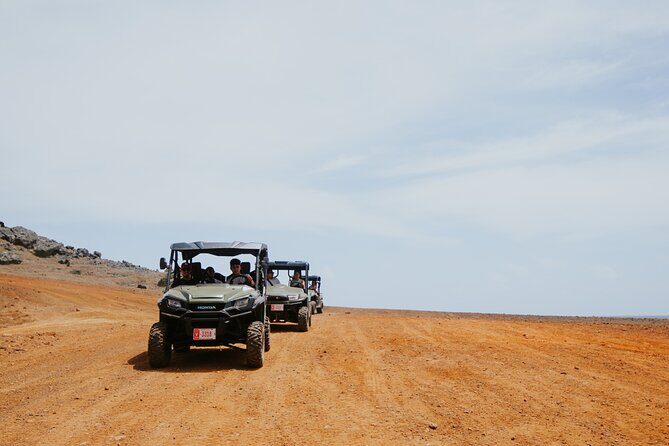
You need a driver’s license, and the minimum driving age is 18+. Passengers must be at least 3 years old. Car seats can be provided.
Even if you’re new to UTVs, this tour is set up to teach you fast. Guides explain how to handle braking and steering, and they stay attentive to safety the whole time. That matters because the terrain can get steep and uneven.
From what I’d expect on Aruba’s rougher coastal side, you’ll feel the UTV hop and tilt at points. That’s normal off-road behavior. The key is that your guide manages the pace and tells you what to expect before it happens. In practice, that turns a “maybe I can’t do this” first hour into a “let’s go again” middle of the tour moment.
Also, dust is part of the deal. Even with goggles and bandanas included, you’ll want clothes and hair that can handle grit. If you’re planning to wear sunglasses, they’ll get their workout. I’d bring a backup pair if you’re picky about lenses.
Stop by stop: black sand, natural bridges, surf beaches, and the Mother Bridge viewpoint
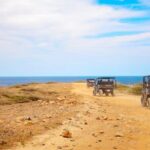
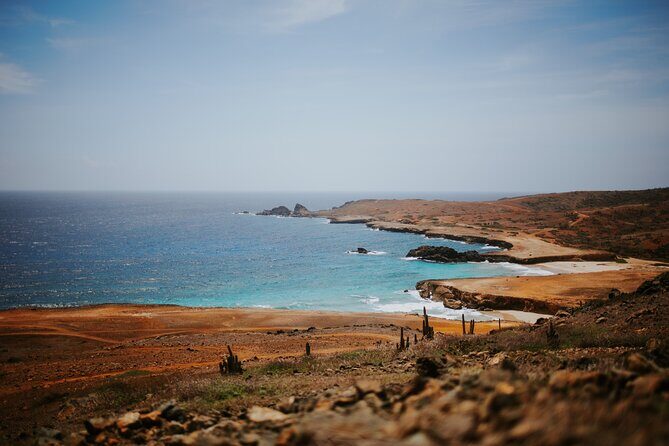
This route is built around Aruba’s “other side”—the one with rugged coastline, dramatic rock formations, and beaches that look nothing like the postcard strip.
Stop 1: Touriffic Adventures transfer and launch
About 15 minutes. You’ll get transported to the tour destination and get the day moving. Admission tickets are included at this start phase, but the real point is that you’re organized early.
You’ll also get a feel for the pace: this is not a slow museum-style tour. It’s active, and the guide keeps the energy up while staying safe.
Stop 2: Blackstone Beach and the triple natural bridge area
You stop around 15 minutes at Blackstone Beach, known for its black sand. The big draw here isn’t only the color—it’s the views and the geology right next to it, including the area near the triple natural bridge (three of Aruba’s remaining natural bridges).
This is a great spot if you like pictures that look like the island is made of sharp edges and sea-weathered rock. It’s also a good place to take a breather after the initial riding stretch.
Quick consideration: black sand attracts heat. Even in shade, it can feel warmer than white-sand beaches, so keep water nearby and don’t linger too long in direct sun.
Andicuri Beach: surf coast + a slow-down for photos
Next up is Andicuri Beach, a surfing beach that sits on the way to off-road trails. The plan is to slow down near the water so you can capture the view and see the coastline up close.
If you’re not a surfer, don’t worry. You don’t need wave knowledge. You’re just watching Aruba’s weather pattern in action—wind, current, and that rocky coastal look.
Shark Bay: for experienced surf conditions
Right by Andicuri is Shark Bay. This is described as a more experienced surfing beach due to stronger current and rocky surroundings, plus bigger waves.
This stop is mostly about atmosphere and observation. You’ll want to stay focused on your footing and keep a respectful distance from where waves hit hardest.
The Mother Bridge viewpoint: what collapsed and what replaced it in your imagination
You’ll also see an eagle-view look at where Aruba’s Mother Bridge collapsed in 2005. The tour frames it as a former #1 attraction, and the viewpoint helps you understand why that bridge was so special.
This is one of those stops that lands best when you let the guide’s story do its job. Even if you’ve seen bridge photos before, standing in the right place makes the collapse feel real, not just tragic trivia.
Bushiribana Ruins, Catholic-era history, and natural bridge views
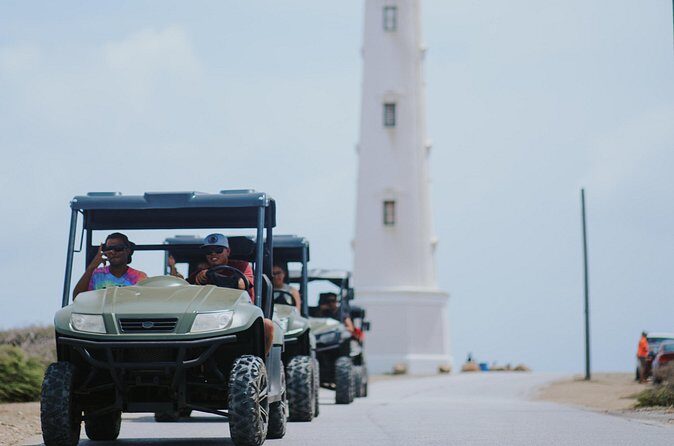
Later in the day, you shift from “coast drama” to “history you can stand next to.”
Bushiribana Ruins: the island’s story in stone
You spend about 20 minutes at Bushiribana Ruins. Your guide shares how this site fits into Aruba’s past, and it’s one of the best stops for learning because you’re looking at remnants, not just hearing explanations.
The vibe here is different from the beach stops. It’s calmer. It feels grounded. And you get a break from the constant sun exposure from the UTV ride.
Wariruri Beach + the baby natural bridge
From there, you’ll enjoy the view of Wariruri Beach along with the baby natural bridge—one of the remaining bridges on the island.
This section is ideal for people who like structure: you’re seeing how the coastline and the bridges relate to each other, not just spotting one viewpoint at random.
Catholic religion introduced: the 1750 to 1950s timeline
A key history moment is that a site was built around 1750 where the Catholic religion was introduced to Aruba. The ruins were found later, in 1950, and documentation like restoration or identification followed in 1952.
If you’re the type who hates long lectures, don’t worry. The way this tour is set up, the timeline gets tied to visible surroundings. You’re not trying to memorize dates; you’re building a mental map of why these places matter.
One drawback to keep in mind: if you’re visiting mainly for beach time, the ruins stop can feel more “thinking” than “swimming.” I still think it’s worth it because it makes the later coast stops feel more intentional.
California Lighthouse and the calm-side vs rough-side contrast
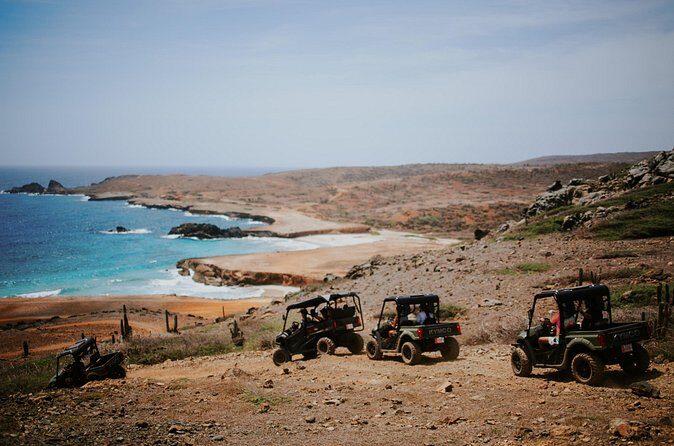
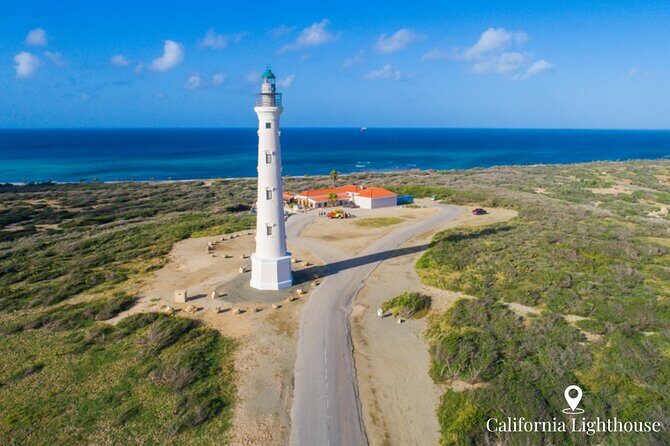
The tour then heads toward a downtown walking segment with an iconic viewpoint: the California Lighthouse.
This is about 20 minutes. The point isn’t only the photo spot. It’s the contrast: you get to experience both sides of the island—the calm side and the rough, wavy side—in a way that’s hard to appreciate from just one beach.
If you’ve ever wondered why Aruba can look so different within a short drive, this is the moment it clicks.
Bring your camera. Light can change fast here, and the best shots often come when you switch angles instead of just shooting from one spot.
Arashi Beach: the finish with a real chance to cool off
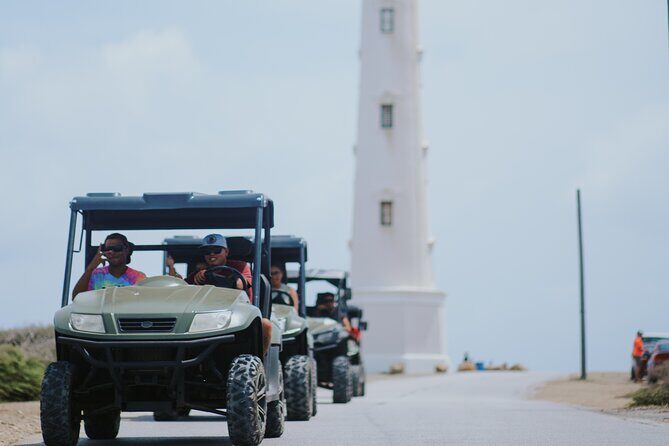
The final big stop is Arashi Beach, about 20 minutes.
This is where you decide how you want to end:
- take a refreshing dip
- or keep it simple with a cold drink or snack at the Arashi beach shack restaurant
After hours of dust, bouncing roads, and ocean cliffs, a proper beach finish feels like a reward. It also gives you a practical reset before you head back.
If you’re not planning to swim, still wear footwear you can walk in comfortably. Aruba’s shorelines can be uneven, and you don’t want to slip when the water pulls at the edges.
Guide impact: Toto, Q, and Juan make the day feel VIP
The guide is the difference between a fun ride and a day that feels like it was built around you.
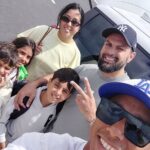
Many riders talk about Toto for a reason. Guides like Q and Juan show up in the same theme: they teach driving clearly, keep safety in mind, and add stories that connect what you see to Aruba’s culture and survival as an island.
You’ll also see how much they pay attention to the group size. People consistently value that small-group setup because it creates real flexibility. That can show up as:
- getting extra help if you’re unsure about the UTV driving basics
- taking extra time at a stop if photos or the view require it
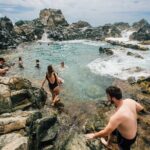
- guiding you through an optional natural pool or cliff-style jump moment with encouragement and safety focus
Some guides are also proactive photographers. If you want videos or pictures of your driving, your guide may take short clips and capture moments for you while you’re riding. That saves you from handing your phone to a stranger and hoping it turns out.
Practical tips before you go (so your day stays fun)
- Wear closed-toe shoes you don’t mind getting dusty. You’ll be on rocks and uneven ground.
- Plan for dust even with goggles and bandanas included. It’s smart to bring sunglasses with a snug fit.
- Bring a little patience for the bumpy parts. This is not a smooth-road day.
- If it has rained recently or rains during the tour, terrain can get messy. In that case, you may want water shoes or shoes with good grip for beach and rock edges.
- Pack swim stuff if you want the Arashi Beach dip. If you don’t, bring a towel or something quick-dry if you’re sensitive to being damp.
One more note: the tour is for a moderate physical fitness level. You don’t need to be a mountain athlete, but you should be comfortable handling a hands-on, moving experience with stops that require short walks and steady footing.
Also, UTVs here do not go into Arikok Park, since UTV access there isn’t allowed. So if you’re chasing a specific park route, this isn’t that tour type.
Who should book this UTV tour in Aruba
This is a great fit if:
- you want active sightseeing, not just driving past views
- you like small groups and don’t want to fight crowds at every stop
- you’re new to UTVs and want clear instruction
- you care about island stories tied to real places, like ruins and bridge viewpoints
It may be less ideal if:
- you’re seeking a fully relaxed, low-motion day
- you hate dust or bumpy rides
- you want long stretches of pure beach time without any history stops
Should you book Exclusive Aruba UTV Tours?
I’d book it if you want Aruba to feel hands-on: rugged coasts, black sand, natural bridge views, ruins, lighthouse contrast, and a beach finish. The small-group setup is the main reason this tour tends to feel better than the big-line UTV days, and the included dust protection plus water makes it easier to enjoy the ride instead of managing discomfort.
Book it if you’re traveling as a pair (price is per group up to two) and you want a guide who keeps the day safe and fun. Pass if you’re hoping for a smooth, spa-like excursion or if you specifically want Arikok Park access.
If you go, you’ll get a full loop of Aruba’s look and feel in about four hours—and you’ll probably come away with better photos than you expected.
FAQ
What’s the duration of this Aruba UTV tour?
The tour runs for about 4 hours.
Where does the tour start and end?
The meeting point is Caya Soeur Meletia, Aruba, and the activity ends back at the meeting point.
Do you offer pickup?
Yes, pickup is offered, and private transportation is included.
What are the age requirements for driving and riding?
To drive, you must be 18 years old and above with a driver’s license. Passengers must be at least 3 years old, and car seats can be provided.
What’s included and what should I bring?
Included: bottled water, dust goggles and bandanas, private transportation, and a guide. Snacks are not included, so plan to grab something at Arashi Beach if you want food.
Can I get a full refund if I cancel?
Yes. You can cancel up to 24 hours in advance for a full refund. If you cancel within 24 hours, the amount paid is not refunded.