REVIEW · ARUBA
Half-Day Aruba Intro Diving Course for Beginners
Book on Viator →Operated by Red Sail Sports - Aruba · Bookable on Viator
Scuba is one of those skills that sounds scary until you see how it’s taught. In Aruba, this half-day intro scuba course mixes classroom basics, pool practice, and a guided shallow underwater session in the warm Caribbean. You start simple, stay close to your instructor, and end with real wildlife and wreck scenery.
What I like most is the small group size (max 4) paired with a calm, step-by-step approach many first-timers describe as anxiety-reducing. I also like that you’re not just learning gear on land—you get two hours in the pool, then an open-water session around 30–40 minutes with an instructor right there with you.
One thing to consider: the experience isn’t a long “see everything” excursion. You get a short underwater window (with shallow depths around 20–30 ft), and conditions or health screening can affect participation.
In This Review
- Key Things That Make This Intro Scuba Course Work
- Aruba Makes First-Time Scuba Feel Practical, Not Risky
- Where the Course Starts (Piet’s Pier in Noord)
- Pool Training: The Part That Decides If You Enjoy the Ocean
- The Boat Ride: Shallow Reef or a Real Shipwreck
- What You’ll See Underwater: Fish, Turtles, and Wrecks Close-Up
- Instructor Style and Small Numbers: Why This Course Feels Personal
- What to Wear and Bring So You Don’t Hate the Gear Part
- Price and Value: How $104 Makes Sense for a Real Intro
- Weather, Health Checks, and When You Should Worry
- So, Should You Book This Aruba Intro Scuba Course?
- FAQ
- How long is the Aruba half-day intro scuba course?
- Do I need any previous scuba experience?
- What’s included in the price?
- How deep is the open-water session?
- How many people are in the group?
- Is this activity safe to do if I’m flying soon?
Key Things That Make This Intro Scuba Course Work
- Max 4 travelers means you’re not lost in a crowd.
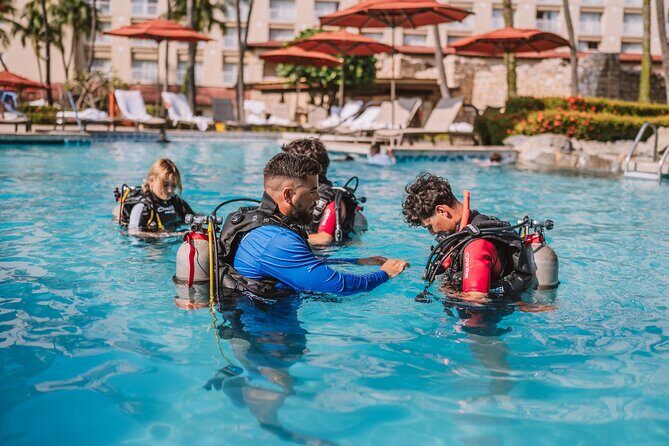
- 2 hours of pool training covers pressure basics, breathing on scuba, and equipment use.
- 1-tank open-water session lasts about 30–40 minutes, typically at 20–30 ft.
- You choose a shallow reef or a shipwreck site depending on the day’s plan.
- All equipment + water are included, so you’re not scrambling for rentals.
- The boat is built for beginners with twin drop-down ladders, rinse showers, and a photo table.
Aruba Makes First-Time Scuba Feel Practical, Not Risky
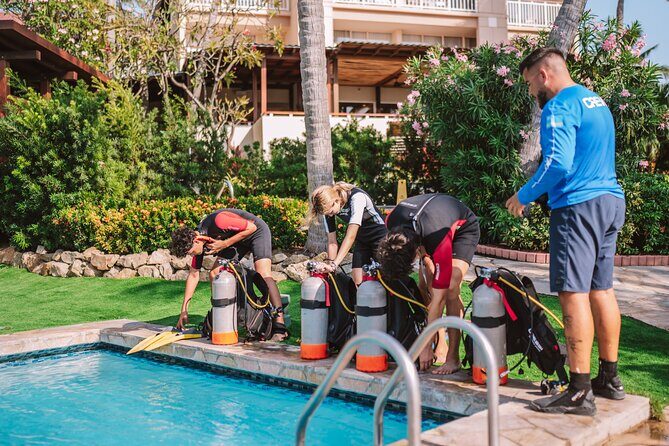
I love how this course is built for “I’ve never done this” people. The training is staged so you earn each next step: breathing and buoyancy first in the pool, then a controlled underwater experience in open water. The whole point is to help you get comfortable with the gear and the body sensations before you’re out there with waves overhead.
You’re also not going for deep water. The target depths are shallow—about 20–30 ft—which helps beginners manage breathing, buoyancy, and awareness. In Aruba’s clear Caribbean conditions, even a short underwater window can feel like a full scene because you’re close to the features and the marine life.
The vibe tends to be hands-on and reassuring. Names you might see associated with calm instruction include Lennart (Leonard), Carl, Manny, Carlos, and Ernie, plus staff like Leendert and Lisa for first-time support. You don’t need to be fearless; you need to be teachable.
Other scuba diving tours in Aruba
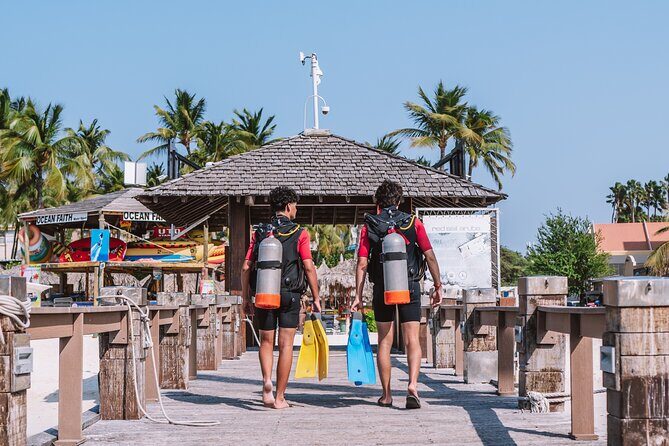
Where the Course Starts (Piet’s Pier in Noord)
You’ll meet at Piet’s Pier Bar, on J.E. Irausquin Blvd 85 in Noord. It’s a straightforward pickup point, and the activity starts and ends back around the same location. That matters because you’re not wasting half your day on complex transfers.
It’s also close to public transportation, which is handy if you’re staying in or near Noord and don’t want to plan around a private ride. Aim to arrive early enough to get checked in without stress. Several first-timers emphasize that the staff and captain are great once you’re underway, but a smooth start depends on being present for the paperwork and briefing.
If you’re the type who likes to settle in, treat this like your “get ready for the sea” moment: water, bathroom, and last-minute gear checks before you head to the boat.
Pool Training: The Part That Decides If You Enjoy the Ocean
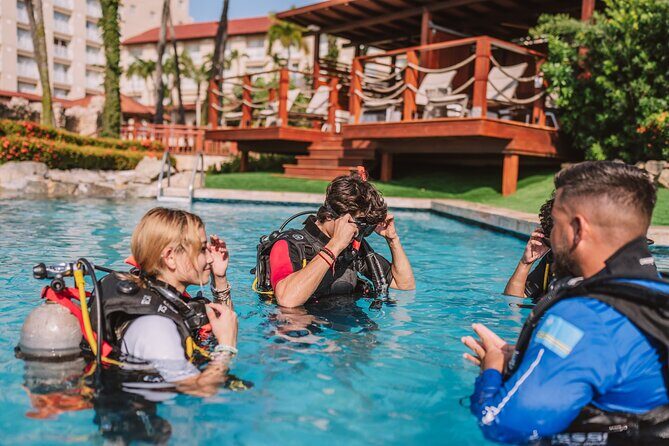
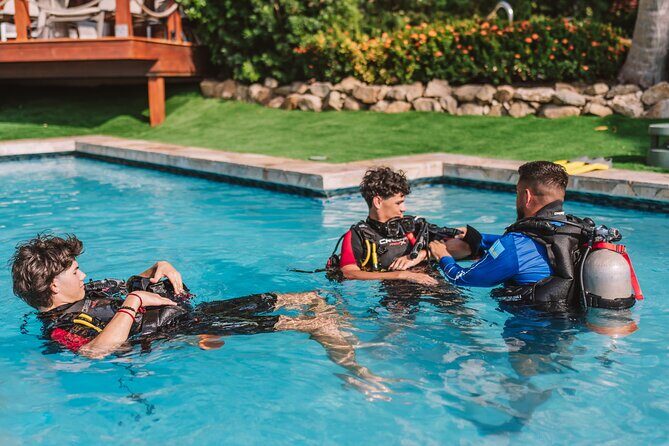
This course is heavy on fundamentals, and it starts in the pool. You’ll spend about two hours practicing with instruction that covers the basic rules of scuba, including how pressure works, how you breathe using scuba gear, and how to use the equipment safely.
In a pool you learn without the mental tax of waves, currents, or shoreline distance. You can focus on the mechanics: inhaling and exhaling through the regulator, managing your buoyancy, and communicating underwater. The goal isn’t perfection; it’s comfort.
A common theme in feedback is patience. First-timers describe instructors staying calm, explaining clearly, and giving extra practice until breathing and mask comfort click. If you’re bringing a child (the course isn’t recommended for kids age 10 and under) you’ll want an instructor style that feels reassuring. Many people report instructors being gentle and methodical once you’re in the water.
The Boat Ride: Shallow Reef or a Real Shipwreck
After pool practice, you’ll head out on a boat for about 1.5 hours. The plan is to go to either a shallow reef or a shipwreck site. On paper it’s simple—get offshore, get you down, get you back—but in practice the shipwreck/reef choice can completely change what you remember.
The course uses a 1-tank setup for your open-water session, and the underwater time is roughly 30–40 minutes. You’ll go down to about 20–30 ft, which is shallow enough that beginners can spend more time looking and less time fighting discomfort.
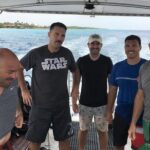
The boat itself is designed to make entry and exit easier. Expect an access setup with twin drop-down ladders on the platform, plus restroom facilities and fresh-water showers to rinse off afterward. There’s also a two-tier photo table, which is a small detail I appreciate because wet cameras and unstable surfaces can turn into an annoying problem fast.
What You’ll See Underwater: Fish, Turtles, and Wrecks Close-Up
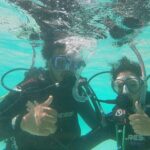
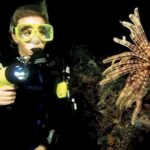
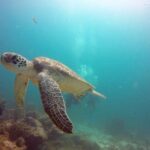
Even with shallow depths and short time, Aruba can deliver big-picture underwater moments. You’re likely to see tropical fish and coral, and it’s not unusual to encounter larger wildlife during the guided session.
Based on real examples from past first-timers, common sightings include:
- Octopus
- Rays
- Sea turtles
- Lobster and shrimp
- Moray eel (on some days)
- A lot of schools of colorful reef fish
- Shipwreck life around the structure
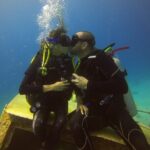
People also connect the wreck experience with a sense of discovery—wrecks feel like they come with a story. Some outings specifically mention wreck locations such as the Pedernales shipwreck, where you might get clear views at shallow depth, often with good visibility.
Your instructor stays with you underwater the whole time. That matters because it keeps your attention on what you came for: watching fish, noticing coral shapes, and staying calm while your body adjusts to breathing underwater.
A few more Aruba tours and experiences worth a look


Instructor Style and Small Numbers: Why This Course Feels Personal
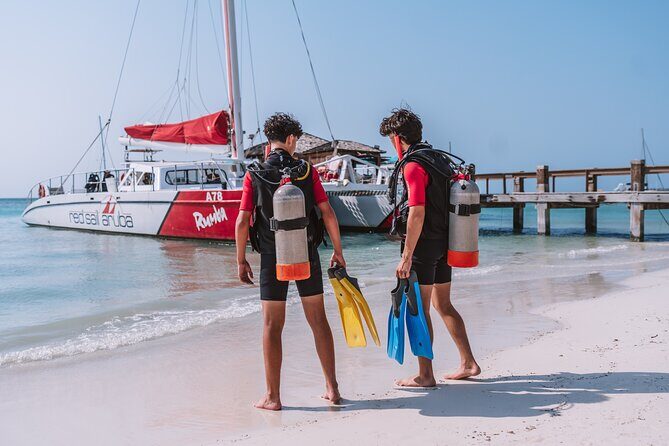
The course caps at 4 travelers, and that changes everything. In a small group, instruction can stay close to you instead of being generic. You’re more likely to get corrections on your buoyancy, breathing rhythm, and equipment setup right when you need them.
Many first-timers highlight how instructors emphasized calm. In feedback you’ll see words like patient, professional, and steady—plus specific instructors praised for calming nervous students from the moment they met them. Names that come up include Lennart (Leonard), Manny, Carlos, Danny, Ernie, Freddy, Mike, Laurent, and Leendert.
Here’s the practical takeaway: if you’re anxious, this setup works because your instructor can slow down the pace and repeat key steps. If you’re confident but new, the small group still helps because you can practice without waiting your turn for basic feedback.
What to Wear and Bring So You Don’t Hate the Gear Part
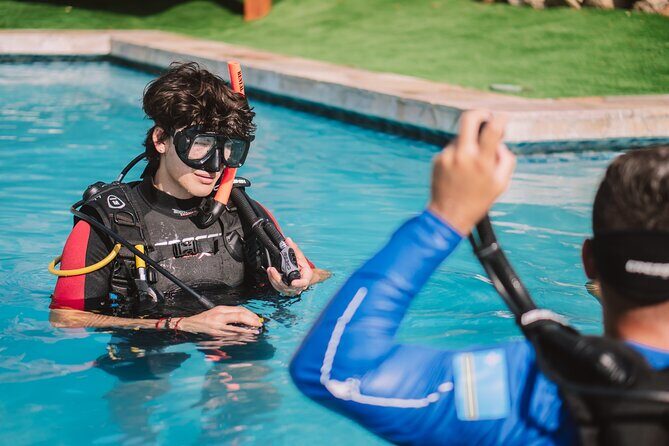
This is a gear-focused experience, so comfort matters. You’ll have all dive equipment included, which is a huge value win—especially if you’re not sure you’ll keep diving after this try.
Wear something you don’t mind getting scuffed. One first-timer pointed out that the equipment can leave rubber marks on swimwear, and recommended wearing a black suit or something older you won’t feel bad about damaging. That’s not the headline on the course, but it’s exactly the kind of practical detail that saves your vacation mood.
Bring:
- A swimsuit you’re okay with getting marked
- A towel
- Sun protection for the boat ride
- A bag for wet items
You’ll rinse with fresh-water showers at the end, which helps your skin and keeps your day comfortable.
If you’re sensitive about mask fit (one person described mask-fitting trouble during the pool session), be ready to ask for adjustments early rather than waiting. The pool is where you fix these things.
Price and Value: How $104 Makes Sense for a Real Intro
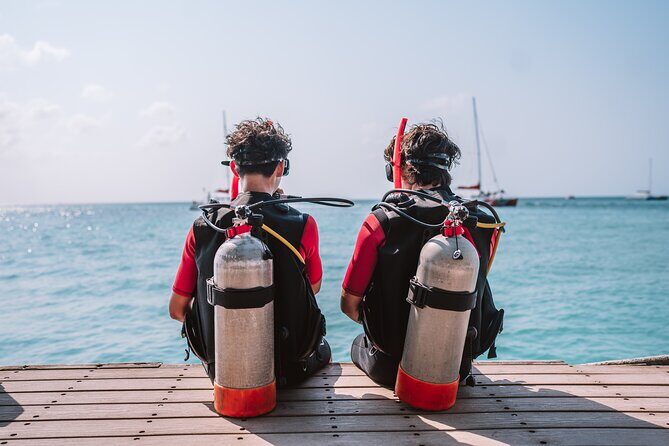
At $104 per person, this course feels like a solid deal if you compare it to what you’d pay for separate pieces: pool training time, guided open-water time, a boat trip, and equipment rentals.
What you’re getting for the money:
- All equipment included
- Instruction session + open-water session
- Water provided
- A boat trip timed for beginners
- A supervised 1-tank underwater experience at shallow depth
You’re not paying for an all-day “multiple stops and long bottom time” program. You’re paying for a guided first experience that’s built to get you comfortable and safe. If your main goal is to see Aruba underwater and learn the basics, the timing is actually a feature. Short, focused practice tends to be easier on first-timers.
One more value point: the boat has rinse showers and the company uses accessible entry ladders. Those details reduce friction for beginners.
Weather, Health Checks, and When You Should Worry
This activity requires good weather. If conditions are poor, the operator offers a different date or a full refund. That’s fair: ocean calm matters when you’re learning gear and buoyancy.
You also need to clear basic medical screening. You may be asked to complete a medical questionnaire, and the operator can refuse service if you don’t meet safety requirements. If you have heart problems, recent colds or congestion, epilepsy, asthma, or you’re under the influence of alcohol or drugs, you should not dive. And if you are pregnant or might be, you should talk with your doctor first.
Here’s another practical note: it’s a safety rule that you should not snorkel or do any scuba activity the same day you fly. Plan your Aruba timing so your water day and your flight day don’t overlap.
Finally, keep in mind that sometimes plans change for health reasons. One situation in feedback describes a student and child being postponed because of coughing after the pool session. The rule here is simple: if you’re not feeling well, it’s better to postpone than force it.
So, Should You Book This Aruba Intro Scuba Course?
If you want a first scuba experience that’s structured, beginner-friendly, and not brutally long, I think this is an easy yes. The small group size, the two hours in the pool, and the guided shallow open-water session add up to a very manageable way to see Aruba underwater without needing prior training.
I’d say skip it (or postpone) if you’re dealing with medical issues that could affect safe scuba participation, or if you need a flexible schedule that can’t handle weather changes. And if you’re expecting a long, multi-stop water adventure, adjust your expectations—this course is short by design.
FAQ
How long is the Aruba half-day intro scuba course?
It runs about 4 hours total (approx.), including pool instruction and a boat trip with an open-water session.
Do I need any previous scuba experience?
No. The course is designed for beginners and requires no prior scuba experience.
What’s included in the price?
The price includes instruction, all dive equipment, an open-water scuba session, and water.
How deep is the open-water session?
The underwater part is typically in the 20–30 ft range.
How many people are in the group?
This activity has a maximum of 4 travelers, so instruction stays close.
Is this activity safe to do if I’m flying soon?
You should not snorkel or do any scuba activity the same day you fly. You’ll need to schedule your scuba time accordingly.
If you want, tell me your travel dates and whether you’re more interested in reef scenery or wrecks, and I’ll help you plan the timing so it fits smoothly with the rest of your Aruba day.