REVIEW · ARUBA
Guided Trikes Tour Around Aruba Island
Book on Viator →Operated by Trikes Aruba · Bookable on Viator
A trike tour is Aruba at full speed. You steer a three-wheeler with a guide, hit big photo stops, and add real local stops like a glass workshop and aloe museum. I especially like the hands-on driving (with training so first-timers aren’t left behind) and the mix of viewpoints plus culture in one easy half-day. One thing to consider: you’re in the sun for long stretches, and the driving is not for people who want zero responsibility at the wheel.
The guides make the day feel smooth and safe. Marco and David came up again and again for being friendly, attentive, and clear about what to do, including a pre-ride check so you don’t feel thrown into it. If you’re coming from a cruise, plan on using their pickup and signage to get to the trikes setup area, because the port setup can be a bit confusing.
In This Review
- Quick hits before you go
- Why a trike tour feels different on Aruba roads
- Before you start: training, photos, and what to pack
- Alberto Vista Chapel: panoramic Aruba views plus included entry
- Lighthouse Point route: ocean lookouts with optional climbing
- Casibari Rock Formations: the climb that earns the view
- Studio Murano glass art: a hands-on feel without the long wait
- Aloe Factory: optional museum time with products and production stories
- The big ride: driving most of Aruba for about 1 hour 45
- Price and value: what $95 buys you (and what to watch)
- Who should book this trike tour (and who should pass)
- Tips that make the day smoother on trikes
- Should you book this Guided Trikes Tour Around Aruba Island?
- FAQ
- How long is the Guided Trikes Tour Around Aruba Island?
- Where does the tour start and end?
- Is pickup included?
- Is the tour private?
- What’s the price and what’s included?
- Do I need a mobile ticket?
- Do I drive the trike, or do I just ride?
- Which stops have included admission?
- Are there restrooms and places to buy refreshments?
- What should I bring for the ride?
- What happens if the tour is canceled due to weather?
Quick hits before you go
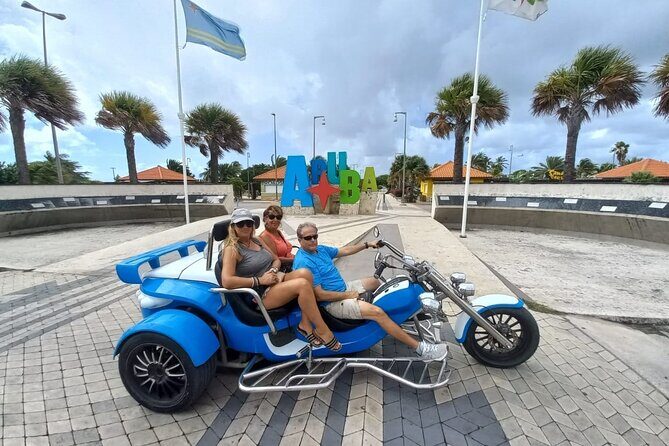
- Drive your own trike with a short training and test ride, so you’re not just a passenger.
- Alto Vista Chapel + lighthouse views give you classic Aruba scenery fast, with included entry at the chapel and free time at the lighthouse point.
- Casibari Rock Formations means a real climb and city views, plus restrooms on-site.
- Studio Murano glass demonstration is a fun, hands-on-style art stop with a photo moment and bathrooms (snacks cost extra).
- Optional Aruba Aloe Factory adds a museum/store visit focused on production and products.
- Photo service is included, and guides take group shots during the tour (you’ll find them posted afterward).
Why a trike tour feels different on Aruba roads
Aruba rewards slow, shaded strolling. But it also rewards speed, sea air, and getting your own rhythm. This tour is built around the best of both worlds: you get guided stops with context, yet you’re still driving yourself, not watching from a van window.
The setting helps. Aruba roads are straightforward, and you’ll move along a mix of coastal overlooks, viewpoints, and inland roads. That matters because you’re not stuck doing only resort-area sightseeing. You’re seeing the island as a place people live and work, while still hitting the famous stops.
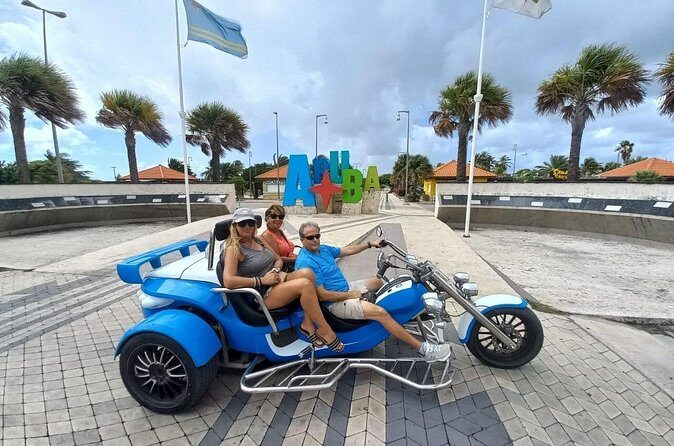
And yes, it feels a little like being a celebrity. Trikes roll through towns, people notice, and you’re moving in a way that’s hard to replicate with a bus. That social factor is part of the fun, even if it’s just a few waves from the roadside.
Other guided tours in Aruba
Before you start: training, photos, and what to pack
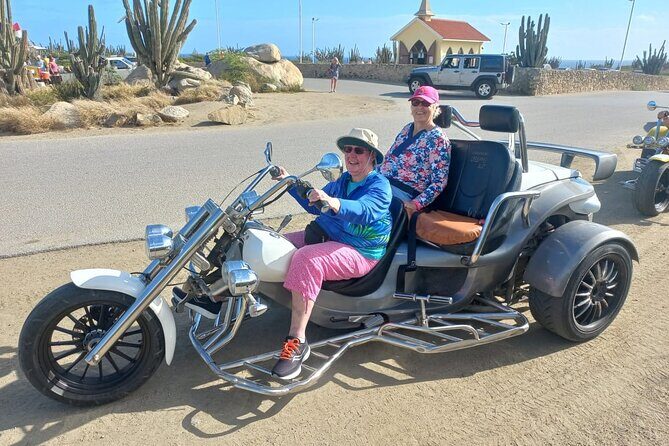
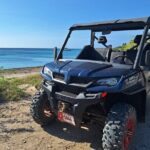
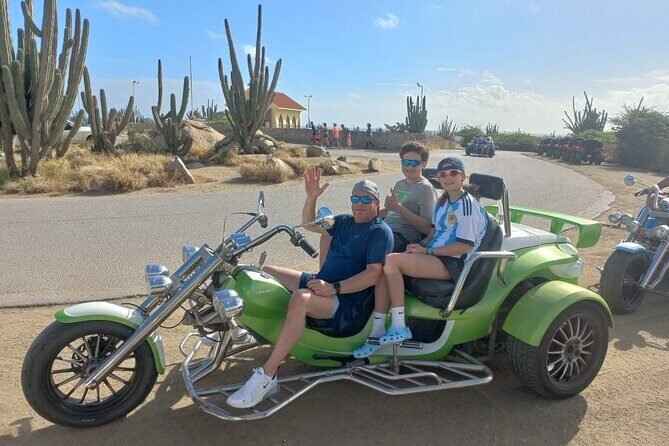
You’ll get more than a quick wave and good luck. The guides take time to make sure you can drive comfortably before the tour starts, including individual instruction and a test drive. Older riders in particular liked this “get comfortable first” approach, and it’s a big reason the experience stays relaxing even though you’re on a motorized vehicle.
Next, pack like you’re planning a sun-and-wind day, not a museum afternoon. Bring sunscreen and something for your head—reviews specifically call out head covering needs. A water bottle is also a must, and one smart tip is to keep it secured to you so you don’t spend the whole ride stopping for water.
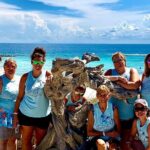
Finally, plan for photos. You’ll have a photo session during the day and the tour includes pictures taken by the staff. People say the photos show up afterward on Facebook for free, but they’re not necessarily studio-perfect images. Still, they’re included, and the guides take them often enough that you’ll likely leave with at least a few solid shots.
Alberto Vista Chapel: panoramic Aruba views plus included entry

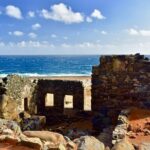
The tour starts with Alto Vista Chapel, one of Aruba’s most recognizable viewpoints. You’ll walk around the chapel, get a history explanation, and have time to take pictures inside and outside. Admission is included, so you’re not juggling a “do we pay or not?” moment at the first stop.
What I like about leading with this stop is the payoff. From up here, you get a broad ocean view and an instant sense of where Aruba sits in the Caribbean. Even if you’ve seen the island before, this angle tends to feel fresh because it’s a wide look, not a close-up street scene.
Time is short—about 10 minutes on-site—so keep your expectations realistic. This is a “see it well, photograph it, learn a bit, then go” stop. If you want to linger, you can, but the schedule is designed to keep the day moving.
Lighthouse Point route: ocean lookouts with optional climbing
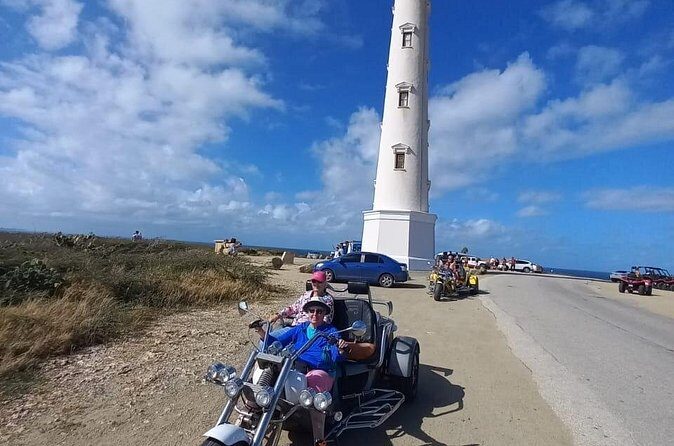
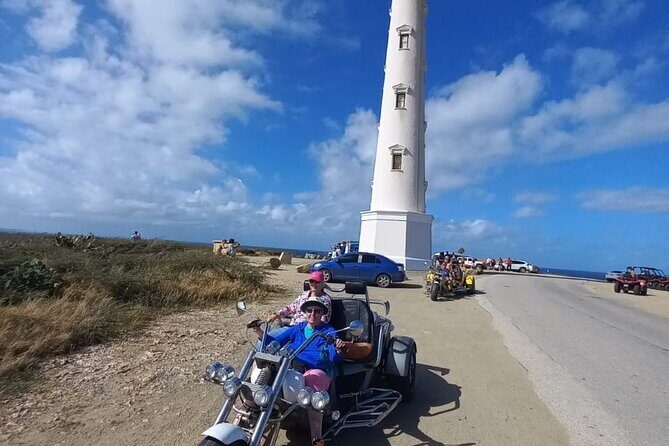
Next comes Lighthouse Point. You’ll ride around the lighthouse on the trike and also get a walking section for ocean lookouts. Admission here is free, and the schedule leaves room for people who want to go up the lighthouse—if you’re interested in the climb, this is your moment.
This is a good stop for anyone who likes scenery with a little variety. You get both the moving view (rolling by on the trike) and a stationary perspective (when you’re walking and looking out over the water). It also breaks up the day between the inland stops and the bigger “ride your own route” block.
A practical note: lighthouse stops can be a bit windy. If you already know you’ll be distracted by gusts, bring sunglasses and keep your hat/head covering secure.
Casibari Rock Formations: the climb that earns the view
Casibari Rock Formations is one of the most satisfying stops on the route because it’s active. You’ll climb the rock formation, get an explanation of where the rocks come from, and then enjoy a view of the city from the top. Admission is included.
This is also where the tour feels like more than “drive, stop, snap.” The climb gives you time to slow down and actually experience the island’s terrain. You’re not just riding past a point of interest; you’re building a viewpoint with your own feet.
There are practical benefits too. Restrooms are available at this stop, and refreshments are for sale. That’s useful because later in the day, you may prefer to keep moving rather than searching for a café.


Studio Murano glass art: a hands-on feel without the long wait
Studio Murano Art & Restaurant adds a creative, cultural break. You’ll get an exhibition showing how glass ornaments are processed, with a photo session during the visit. Bathrooms are available for tourists as well.
This stop is around 20 minutes, so it’s not a full workshop where you’ll make your own piece from start to finish. But the demonstration gives you a real sense of craft, and it’s a nice contrast to all the outdoor viewpoints. If you’re traveling with someone who likes photos but also wants a different kind of activity, this is often the “I’m glad we stopped here” moment.
Snacks are available, but they’re at your expense. In other words: treat it as a quick break, not a meal. If you’re hungry, consider grabbing something before you start or plan on buying a small snack here.
Aloe Factory: optional museum time with products and production stories
Aruba Aloe Factory, Museum and Store is an optional stop. If you choose it, you’ll tour the facility and see an exhibition of how aloe is processed, along with the different products they make from raw aloe.
This optionality is handy because the tour still includes a lot of driving time after this. If you’re the type who wants more beach air and less indoor shopping, skip it. If you like learning how products are made, this is a straightforward cultural add-on.
Admission for this stop is free, which is always a plus when you’re trying to keep costs reasonable. You’ll also be able to browse the store, but the focus here is production and the museum experience, not just a quick gift shop stop.
The big ride: driving most of Aruba for about 1 hour 45
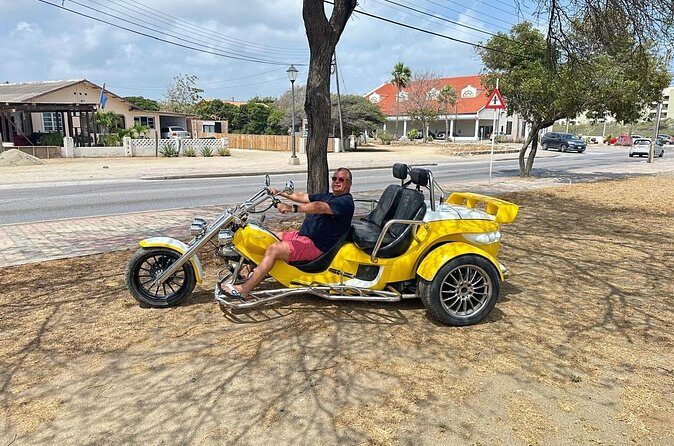
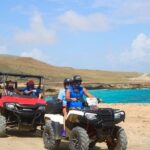
The heart of this tour is the long stretch where you drive your own trike following your guide along most of Aruba’s roads. This is where the experience becomes about freedom, not just sightseeing.
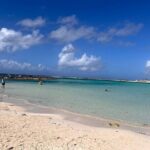
You’ll get several stops along the way, including some seaside moments that people describe as some of Aruba’s most beautiful beach areas. It’s not presented like a full beach day with towel time. Instead, you get the best of the coast through planned stops and viewpoints, which works well for a half-day adventure when you still want time for dinner later.
The ride time is long enough that you’ll feel like you covered real ground. And because it’s guided, you’re not stuck trying to read Aruba road signs or guessing where the best photo spots are.
One more reason this tour fits many groups: it’s designed for real riders, including older people and riders who haven’t driven a motorcycle before. Multiple guides’ attention to safety and instruction keeps it from feeling intimidating.
Price and value: what $95 buys you (and what to watch)
At $95 per person, this is not a “cheap thrill” add-on. It’s a priced activity built around vehicles, staff, and multiple included entry stops.
Here’s where the value comes from:
- Private transportation and in-person guides in multiple languages (English, Spanish, Italian).
- Included admission at Alto Vista Chapel, Casibari Rock Formations, and Studio Murano.
- Photo service included during the tour.
- Free entry at Lighthouse Point and the optional Aruba Aloe Factory.
When you compare it to bus tours that only do quick photo stops, the combination of driving + included entries is why people call it worth it. Even when someone had a minor complaint about images or pace, the core idea stayed the same: you’re paying for a guided day with real variety.
The main watch-out is driver comfort. If you feel anxious driving, or you’re a very inexperienced rider, the trike is still a motor vehicle and the roads can include other drivers. One review specifically mentioned there are almost no traffic lights, with one notable exception, so you’ll be handling normal road traffic flow. Most people handle that fine with instruction, but it’s worth choosing this tour with clear eyes about your comfort level.
Also, bikes can be older on some days. One negative comment mentioned vehicle wear and a flat tire causing delays. That’s not the majority of feedback, but it’s a reason to show up with flexibility and keep a calm mindset if something mechanical happens.
Who should book this trike tour (and who should pass)
Book it if you want a memorable Aruba morning or afternoon that mixes classic sights with real local stops. It’s especially good for:
- Couples celebrating something, because it feels special and photo-friendly.
- First-time Aruba visitors who want to see multiple highlights without planning.
- People who learn better when they can ask questions in person—guides like Marco and David tend to explain each stop clearly.
You might skip it if:
- You want a quiet, seated sightseeing day. This is active and sun-heavy.
- You don’t want to drive at all. You are expected to operate the trike, even though the guide handles instruction and pacing.
- You have strong anxiety around riding in traffic. Safety instruction helps, but you’re still on the road.
Tips that make the day smoother on trikes
A few small choices can make a big difference:
- Wear a head covering that stays put. The combination of sun and wind is real.
- Bring water and keep it accessible. Stops are planned, but don’t gamble on thirst.
- Wear sunglasses. Even in short stops, you’ll be looking outward at ocean and bright sky.
- If you’re on a cruise, assume meeting can take a few extra steps. Plan to find their pickup van and look for their signage rather than staying locked to the immediate terminal entrance.
- Stay flexible about lunch. There are snacks and refreshments available for purchase at certain stops, but this isn’t built as a long sit-down meal day.
Should you book this Guided Trikes Tour Around Aruba Island?
I’d book it if your goal is to see Aruba in a way that feels hands-on, fun, and efficient. For $95, you get a guided day with multiple included entry stops, photo coverage, and a long driving segment that makes the island feel personal. The best part is how the guides set you up to drive confidently, which keeps the experience from turning into stress.
I’d think twice only if driving makes you nervous or you want mostly shaded time. If that’s you, you may prefer a walking-and-van style tour instead.
If you match the vibe—sun, motion, and a mix of viewpoints and culture—this is a strong Aruba value and a day you’ll remember more for the feeling of the ride than for just another list of places.
FAQ
How long is the Guided Trikes Tour Around Aruba Island?
It runs about 3 hours to 3 hours 5 minutes total, with a longer driving segment of about 1 hour 45 minutes.
Where does the tour start and end?
The tour starts in Noord, Aruba and ends back at the meeting point.
Is pickup included?
Pickup is offered.
Is the tour private?
Yes. It’s private, meaning only your group participates.
What’s the price and what’s included?
The price is $95 per person. Included items cover private transportation and in-person guides in English, Spanish, and Italian, plus admission tickets for some stops and free entry for others.
Do I need a mobile ticket?
Yes. A mobile ticket is used.
Do I drive the trike, or do I just ride?
You drive your own trike while following the guide.
Which stops have included admission?
Alto Vista Chapel, Casibari Rock Formations, and Studio Murano have admission included. Lighthouse Point is free, and the Aruba Aloe Factory is an optional stop with free entry.
Are there restrooms and places to buy refreshments?
Yes. Restrooms are available at Casibari Rock Formations and at Studio Murano, and refreshments are available for sale.
What should I bring for the ride?
Bring sunscreen and a head covering. Also plan on carrying water (a water bottle attached to your body is a helpful tip).
What happens if the tour is canceled due to weather?
The experience requires good weather. If it’s canceled due to poor weather, you’ll be offered a different date or a full refund.